
Bottling Your Homebrew
Bottling is the easy part. Your beer is already made, and all you are doing now is giving the yeast a little more sugar so it carbonates the beer in the bottle. Take your time, keep everything clean, and you’ll have about two cases of beer in an hour or so.
What You Need
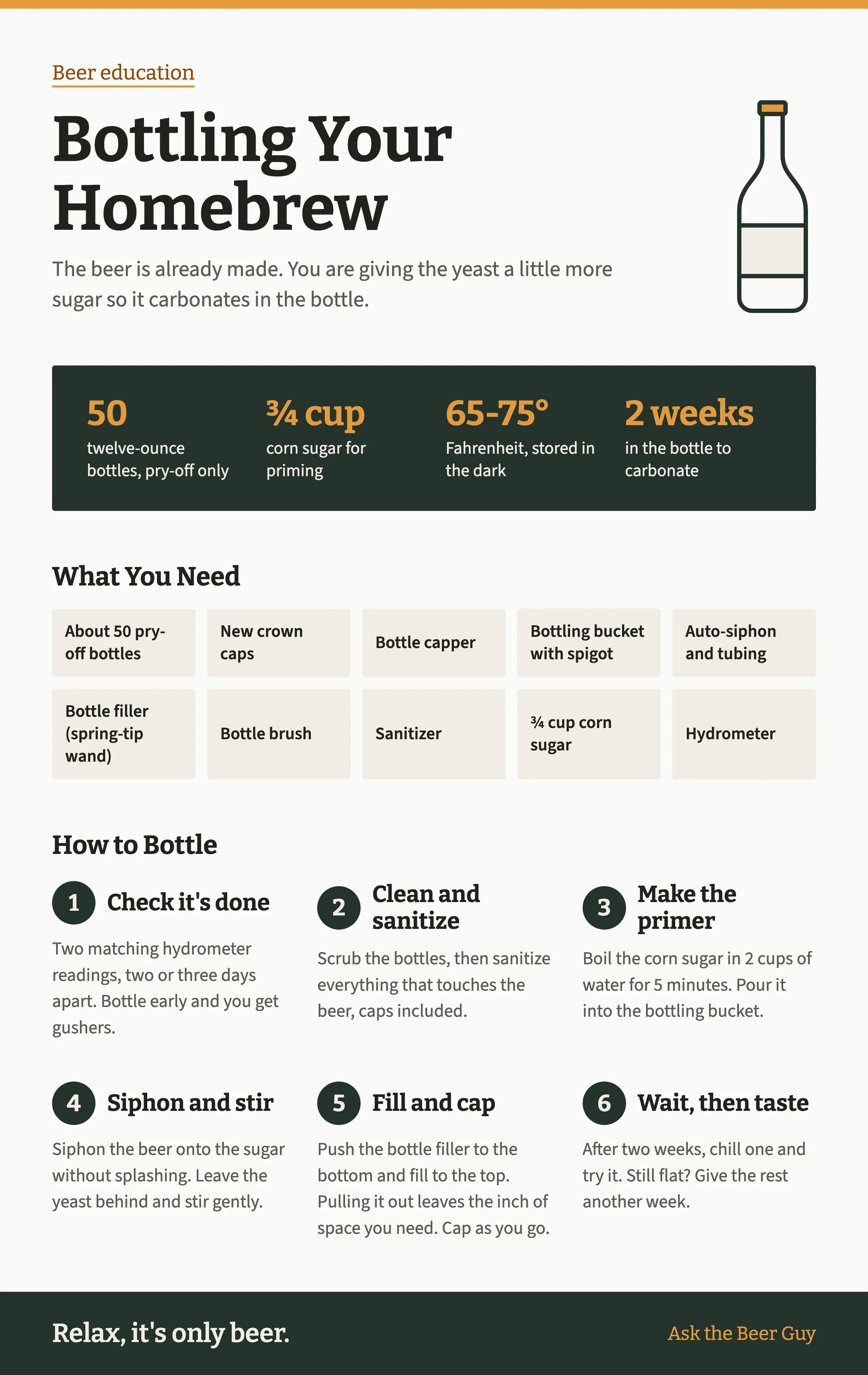
- About 50 twelve-ounce bottles (two cases plus a few spares), or 27 bombers (22 oz). Use bottles that need a bottle opener. Twist-off bottles don’t seal well with a capper.
- New crown caps, a few more than you have bottles
- A bottle capper
- A bottling bucket with a spigot, or a second clean fermenter
- An auto-siphon and about 4 feet of 5/16” tubing
- A bottle filler (the wand with the spring tip)
- A bottle brush
- Sanitizer such as Iodophor or Star San
- ¾ cup (about 4 oz) of corn sugar
- A hydrometer
How to Bottle
- Make sure fermentation is really finished. Take a hydrometer reading, wait two or three days, and take another. If both readings are the same and close to the final gravity in your recipe, you’re ready. If you bottle too early, the yeast keeps eating the leftover sugar in the bottle and you get gushers, or worse, bottles that burst.
- Clean your bottles. Any bottle with dried gunk in the bottom gets soaked and scrubbed with the bottle brush. It’s much easier if you rinse your bottles right after you drink them.
- Sanitize everything that will touch the beer: bottles, caps, bucket, siphon, tubing, bottle filler and spoon. Keep a spray bottle of sanitizer handy for anything you forget.
- Make your priming sugar. Bring 2 cups of water to a boil, stir in the ¾ cup of corn sugar until it dissolves, and boil it for 5 minutes. Cover it and let it cool a bit.
- Pour the priming sugar into the bottling bucket.
- Siphon the beer into the bottling bucket on top of the sugar. Keep the end of the tube under the surface of the beer and don’t splash it. Splashing adds oxygen, and oxygen makes beer taste stale like wet cardboard. Leave the layer of yeast in the bottom of the fermenter behind.
- Stir gently with your sanitized spoon so the sugar is mixed evenly. If it isn’t, some bottles end up flat and others over-carbonated.
- Attach the tubing and bottle filler to the spigot. Push the filler to the bottom of each bottle and fill it to the top. When you pull the filler out, it leaves about an inch of space at the top, which is just right.
- Put a sanitized cap on each bottle as you go and crimp it with the capper.
- Store the bottles somewhere dark between 65° and 75° F for two weeks. The yeast needs to be warm to carbonate the beer. Light, and especially sunlight, will skunk your beer, so keep them in the case or a closet.
- After two weeks, chill a bottle and try it. If it’s carbonated, put the rest in the refrigerator. If it’s still flat, give it another week. Lagers taste best if you keep them near freezing for at least two more weeks after they are carbonated.
- When you pour, leave the last little bit of yeast in the bottom of the bottle. It won’t hurt you, but it does make the beer cloudy and a little yeasty.
Tips
- You can use 1¼ cups of dry malt extract instead of corn sugar. Some brewers think it gives a creamier head. It takes longer to carbonate.
- ¾ cup of corn sugar gives most styles the right amount of carbonation. Use a little less for English ales and stouts, and a little more for wheat beers and Belgian ales.
- A bottling bucket and a bottle filler make bottling much faster and cleaner than siphoning straight from the fermenter.
- Rinse each bottle right after you pour it and you’ll rarely need to scrub one.
Relax, it’s only beer. If you have kept everything clean and waited until fermentation finished, it’s very hard to go wrong.